What Makes 2026’s Best Diet Plans Actually Work (And What Doesn’t)

Most meal plans fall apart within two weeks for US home cooks — not because the food is bad, but because the plan never fit real life to begin with. A high-protein, fiber-rich approach built around USDA 2025–2030 Dietary Guidelines is what separates plans people stick to from plans people abandon by week two.
The single biggest mistake is treating every diet the same. Keto, paleo, and intermittent fasting all work in theory. In practice, a plan that requires you to cook elaborate meals every night fails most people by Wednesday. The new USDA guidelines push whole foods, home cooking, and balanced portions — not perfection.
Budget and simplicity beat perfection every single time. Americans spend an average of $3,000 per year eating out. A practical weekly meal plan using a Sunday prep session can cut that dramatically while improving nutrition at the same time.
This guide covers one repeatable, flexible weekly plan with daily menus, a full grocery list, prep instructions, and swap options for every meal. No brand names, no expensive supplements, and no restaurant-level cooking skills required.
- **Key failure mode to avoid:** treating a 7-day plan like a sprint instead of a lifestyle
- **Core principle:** meal prep on Sunday eliminates 80% of daily decision fatigue
- **USDA 2025–2030 shift:** home cooking and fiber intake now lead the healthy eating conversation
—
Editor’s pick: glass meal prep containers set — see current prices and reviews.
Core Nutrition Principles Behind the Best 2026 Diet Meal Plans
The USDA 2025–2030 Dietary Guidelines emphasize macronutrient balance, fiber goals, and added-sugar limits more clearly than any prior edition. Understanding these numbers makes customizing this weekly plan much easier.
The recommended macronutrient range for a typical US adult breaks down as follows: carbohydrates 45–65% of total calories, fat 20–35%, and protein 10–35%. Fiber intake should hit at least 25 grams per day. Sodium stays under 2,300 milligrams daily, and added sugars stay under 10% of total calories.
The most important behavior change tied to measurable weight loss success is simple: eating at home more. Studies consistently show that people who prepare five or more meals at home per week lose more weight and keep it off compared to those relying on restaurant food or packaged snacks.
Portion sizes in the US are consistently oversized. One practical fix is using the MyPlate method: half your plate is vegetables, one quarter is lean protein, and one quarter is whole grains or starchy vegetables. Fresh fruit sits to the side. This visual guide works better than any calorie-counting app for most people.
- **Sedentary adults:** slightly reduce grains, bump up fiber and vegetables
- **Moderately active adults:** add a protein serving around workout days
- **Protein target:** aim for 0.4–0.5 grams per pound of body weight daily
—
What to Buy Before You Start — The One-Stop Weekly Grocery List

Walking into the store without a list is the fastest way to overspend and abandon a new meal plan. This grocery list covers every ingredient needed for the full week.
Protein Section
Chicken thighs (family pack, bone-in), ground turkey (93% lean or leaner), eggs (one dozen), canned tuna in water, and Greek yogurt (plain, 0% fat). These five items cover the protein base for every day of the plan.
Produce Section
Frozen mixed vegetables, bananas, baby spinach, bell peppers (assorted colors), yellow onions, broccoli florets, sweet potatoes, and lemons. Frozen produce works just as well as fresh for cooked meals and costs significantly less.
Pantry Staples
Brown rice, quinoa, canned black beans, canned diced tomatoes, whole-wheat pasta, olive oil, roasted nuts, hummus, and popcorn kernels. These items form the backbone of quick weeknight meals.
Estimated Weekly Cost
For one adult following this plan, the total grocery bill typically lands between **$75–$90 per week**. Shopping at value retailers and choosing store-brand products over name brands saves 20–40% without sacrificing nutrition.
| Store Type | Typical Savings vs. Name Brand | Best For |
|---|---|---|
| Value retailers (e.g., Aldi) | 25–40% | Produce, dairy, proteins |
| Warehouse clubs (e.g., Costco) | 15–30% | Bulk grains, nuts, frozen items |
| Grocery store own brands | 15–25% | Canned goods, pasta, oils |
—
Sunday Prep Session — 90 Minutes to Set Up Your Entire Week
Setting aside 90 minutes on Sunday transforms the entire week. Instead of cooking every single night, most of the heavy lifting happens once.
**Step 1:** Cook two grains. Make a big batch of brown rice and a separate batch of quinoa. Both keep in the refrigerator for five days and serve as the base for multiple meals.
**Step 2:** Prep three proteins. Bake four to six chicken thighs at 400°F for 35–40 minutes. Hard-boil six eggs. Brown one pound of ground turkey with garlic, onion, and your favorite seasonings. Cool everything and store separately.
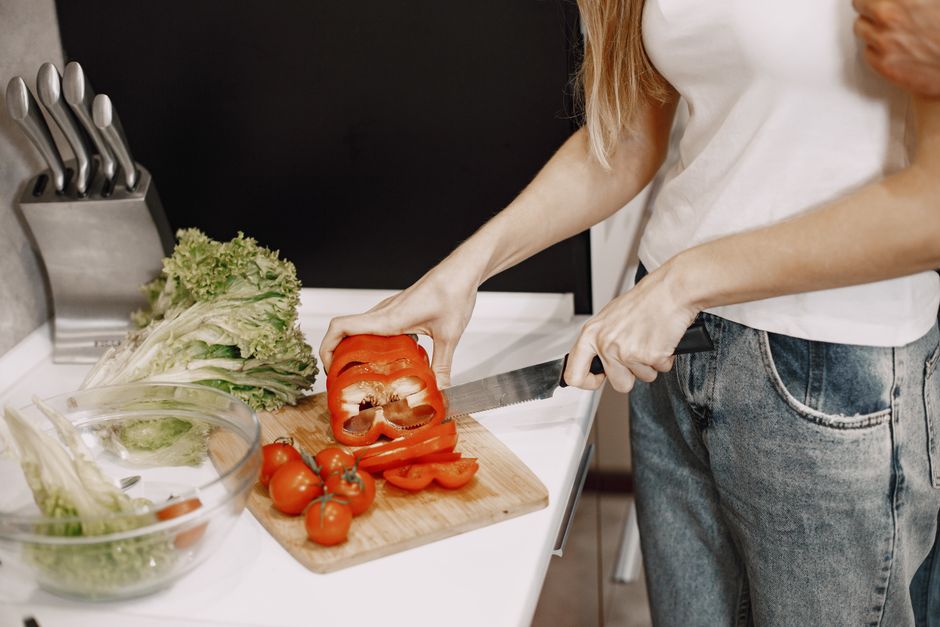
**Step 3:** Wash and chop vegetables. Slice bell peppers into strips, dice onions, portion broccoli florets onto sheet pans ready for roasting. Line a container with paper towels and store cut vegetables inside — the towels absorb moisture and extend freshness by two to three days.
**Step 4:** Portion snacks. Fill small containers with a handful of roasted nuts, cut fruit, or yogurt cups. Having grab-and-go options removes the temptation to open a bag of chips.
Safe storage timelines: refrigerator for three to four days, freezer for up to three months. Label everything with the prep date.
- **Essential tools:** one sharp chef’s knife, a set of glass meal-prep containers with tight lids, and a large sheet pan
- **Time-saving tip:** use the same sheet pan for chicken and vegetables — roast them together for a complete meal with zero extra effort
—
Monday — High-Protein Lunch + Simple Dinner (Kickstart Your Week)
Monday sets the tone for the entire week. A strong first day builds momentum that carries through Wednesday and beyond.
**Lunch:** Grilled chicken over fresh spinach with lemon vinaigrette. Side of brown rice from Sunday prep. Sprinkle sliced almonds on top for crunch and healthy fats.
**Dinner:** Turkey lettuce wraps. Use leftover Sunday chicken or quickly brown the prepared ground turkey with garlic and a splash of low-sodium soy sauce. Spoon the mixture into crisp butter lettuce leaves. Serve with bell pepper strips and a side of hummus for dipping.
Monday meals work because they use pre-cooked chicken from Sunday. Lunch takes three minutes to assemble. Dinner takes under ten minutes with prepped ingredients on hand.
| Meal | Approximate Calories | Protein | Carbs |
|---|---|---|---|
| Lunch (chicken + rice + spinach) | 475 | 42g | 38g |
| Dinner (turkey wraps + hummus) | 380 | 28g | 22g |
—
Tuesday — Fiber-Rich Meals That Keep You Full Until Dinner
Fiber is the most underused tool in American diets. Most adults get roughly 16 grams per day when they should hit 25 grams minimum. Tuesday’s meals close that gap without extra supplements or expensive specialty foods.
**Lunch:** Black bean and corn salad. Combine canned black beans (drained and rinsed), frozen corn (thawed), diced tomatoes, red onion, cilantro, lime juice, and a pinch of cumin. Serve over mixed greens or with whole-wheat tortilla chips on the side.
**Dinner:** Baked salmon with roasted broccoli and sweet potato wedges. Salmon is one of the best sources of omega-3 fatty acids and has become more affordable than many premium fish options in 2026.
Two foolproof methods for baking salmon without overdoing it:
- **Oven method:** 400°F, 12–15 minutes, tent loosely with foil if edges brown too fast
- **Parchment packet method:** seal salmon fillet with lemon slices and herbs in parchment paper — the steam circulates evenly and keeps the fish extremely moist
Readers who do not eat fish can substitute baked tofu (press for 20 minutes first for better texture) or sardines on whole-wheat toast with hot sauce.
—
Wednesday — Budget-Friendly Ground Turkey Day
Ground turkey deserves more credit. It costs less than boneless chicken breast in most US markets and offers more versatility than ground beef, with a neutral flavor that absorbs almost any seasoning profile.
**Lunch:** Turkey and bean chili in a mug. Combine leftover ground turkey, canned black beans, canned diced tomatoes, chili powder, cumin, and garlic in a large microwave-safe mug. Microwave on high for four to five minutes. Top with a spoonful of plain Greek yogurt.
**Dinner:** Turkey meatball spaghetti with zucchini noodles. Mix ground turkey with one egg, whole-wheat breadcrumbs, garlic, and Italian herbs. Form into balls and bake at 400°F for 18 minutes. Serve over spiralized zucchini noodles tossed with marinara sauce.
One hidden cost trap to avoid: flavored ground turkey varieties that contain added sodium and fillers. Buy plain ground turkey and season it yourself. The savings add up across a full week of meals.
- **Ingredient swap for dinner:** replace half the pasta with zucchini noodles to cut carbs by roughly 50% without losing the comfort-food feel
- **Lunch swap:** add a handful of frozen corn and diced sweet potato to the chili for extra fiber and color
—
Thursday — Vegetarian Power Day (No Protein Shortage Here)
Going meatless one day a week saves money, resets your palate, and proves that plant-based meals deliver serious protein. Thursday is the designated vegetarian day in this weekly plan.
**Lunch:** Greek yogurt parfait. Layer plain 0% fat Greek yogurt with mixed berries, a tablespoon of raw honey, and a small handful of low-sugar granola. One serving delivers approximately 15 grams of protein without any meat.
**Dunch:** Vegetarian stuffed bell peppers. Cut the tops off three bell peppers and remove the seeds. Fill with a mixture of cooked quinoa (from Sunday prep), black beans, canned corn, diced tomatoes, shredded cheese, and garlic. Bake at 375°F for 25 minutes until peppers are tender and cheese is bubbly.
Quick fallback for meat-eaters who feel resistant: pick up a small rotisserie chicken from the deli. Shred it into the stuffed peppers or serve it on the side. This keeps the vegetarian structure intact while making the meal feel more substantial.
- **Protein check:** Greek yogurt, beans, quinoa, and cheese combine for roughly 35 grams of protein per stuffed pepper serving
- **Budget benefit:** vegetarian protein sources cost 30–50% less per serving than fresh meat cuts
—
Friday — Comfort Food Made Lean (No Guilt Required)
Friday is the most dangerous day for meal plan adherence. After a full workweek, the temptation to order takeout reaches its peak. This is where having a comforting, satisfying home-cooked dinner becomes a financial and health advantage.
**Lunch:** Tuna salad on whole-wheat bread with carrot sticks. Drain one can of tuna in water and mix with plain Greek yogurt, a squeeze of lemon, and diced celery. Spread on two slices of toasted whole-wheat bread. Serve with pre-cut carrot sticks on the side.
**Dinner:** Homemade turkey burger with baked sweet potato fries. Form ground turkey into a patty, season with garlic powder, smoked paprika, and salt. Pan-sear over medium-high heat for five minutes per side. Serve with baked sweet potato fries tossed in olive oil and sea salt, roasted at 425°F for 20–25 minutes.
The bun swap trick works two ways. A lettuce wrap cuts carbs significantly and adds crunch. A whole-wheat bun adds fiber and makes the burger feel like a proper sandwich. Both options are valid within this plan.
| Option | Carbs | Best For |
|---|---|---|
| Lettuce wrap | ~5g | Lower-carb days, keto-friendly readers |
| Whole-wheat bun | ~24g | Hunger satisfaction, higher energy needs |
Friday dinner comes in at approximately 520 calories and 32 grams of protein — satisfying without the 1,200-calorie takeout alternative.
—
Weekend Prep Reset — Adjusting the Plan for Saturday and Sunday
Weekends require flexibility. Social plans, family brunches, and a slower pace make rigid weekday rules hard to maintain. The solution is an 80/20 approach that keeps progress intact without making weekends feel like punishment.
**Saturday breakfast:** Egg scramble with spinach, cheese, and whole-wheat toast. Crack two eggs into a hot skillet with a splash of water. Add fresh spinach and a sprinkle of shredded cheese. Stir gently until just set. Toast one slice of whole-wheat bread and spread with a thin layer of hummus.
**Sunday dinner:** Slow-cooker chicken tacos. Place bone-in chicken thighs in the slow cooker with taco seasoning, lime juice, and a half cup of water. Cook on low for six to seven hours. Shred the meat with two forks. Serve in corn tortillas with a quick cabbage slaw (shredded cabbage, lime juice, cilantro, and a pinch of salt).
The slow-cooker approach is ideal for Sunday because the meal essentially cooks itself. Pull it together in five minutes before heading to brunch or errands.
The 80/20 rule in plain terms: eat on plan 80% of the time and allow flexibility 20% of the time. This does not mean abandoning the plan on Saturday night — it means having a slice of birthday cake at a family gathering without resetting your entire week.
- **Saturday macros:** approximately 420 calories and 28g protein
- **Sunday macros:** approximately 490 calories and 34g protein
- **Body signal check:** if you exercised this week, Saturday and Sunday are the days to slightly increase portions around active hours
—
Frequently Asked Questions
What is the best diet meal plan for weight loss in 2026?
The best plan is one you can actually stick to long-term. A high-protein, fiber-rich plan built around the USDA 2025–2030 guidelines — with weekly meal prep and simple swap options — consistently outperforms restrictive fad diets for US home cooks. Sustainability beats perfection every time. This weekly guide delivers the structure, grocery list, and daily menus needed to start immediately.
How much does a weekly meal plan cost for one person?
A practical budget meal plan for one adult typically runs **$75–$90 per week** when shopping at value retailers and choosing store-brand products. Buying family packs of chicken thighs, frozen vegetables, and canned beans in bulk drives the cost down further without sacrificing nutrition or flavor. The same principles apply for families, with per-person cost dropping as batch sizes increase.
What are the easiest diet meal swaps anyone can make right now?
Five swaps that move the needle immediately: (1) white rice to brown rice or quinoa, (2) sugary drinks to sparkling water with lemon, (3) chips to roasted nuts or air-popped popcorn, (4) flavored yogurt to plain Greek yogurt with fresh berries, (5) regular pasta to a 50/50 blend of pasta and spiralized zucchini or spaghetti squash. These five changes alone can cut 200–400 daily calories without feeling restrictive.
Top Product Recommendations
| Product Name | Rating | Key Feature | Est. Price | Action |
|---|---|---|---|---|
| Top-rated glass meal prep containers set | ★★★★★ | Editor-recommended glass meal prep containers set from this guide | $18–$42 | Check Lowest Price on Amazon |
| Best-value spiralizer for zucchini noodles | ★★★★☆ | Affordable spiralizer for zucchini noodles — strong everyday results | $12–$28 | Check Lowest Price on Amazon |
| Premium lean ground turkey family pack | ★★★★☆ | Higher-end lean ground turkey family pack for visible, lasting results | $45–$95 | Check Lowest Price on Amazon |
Affiliate Disclosure: This post contains affiliate links. We may earn a commission if you buy through our links, at no extra cost to you. Medical Disclaimer: This content is for informational purposes only and is not medical advice. Consult a healthcare professional before changing diet or exercise.
Leave a Reply